
Custom Suits


Nader Astanboos

September 23, 2026
Most people commissioning their first custom suit spend a long time on the details that show — lapel width, button stance, lining colour — and almost no time on the one decision that determines how the finished suit actually behaves. That decision is the cloth.
Fabric governs how a suit drapes, how it holds a press, how warm it is, how it ages, and whether it looks right in the climate you actually live in. Everything else is styling. This is structure.
Suiting cloth is measured in grams per metre, and the number tells you more than anything else on the label.
Under 240g is a summer cloth. It breathes, it travels reasonably well, and it will not save you in a cold room. Between 240g and 280g is the year-round range, and in Los Angeles it covers most of what anyone needs. Above 300g is genuinely winter weight — excellent cloth, wonderful drape, and impractical here for most of the year.
If you are having one suit made and you live in Southern California, somewhere around 250g to 270g will serve you in almost every situation you will actually encounter.
Two cloths of identical weight can behave completely differently depending on how they are woven.
Worsted is the standard smooth suiting — tightly spun, clean surface, takes a sharp press. It is what most business suits are made from and it is the safest first choice.
Twill has a visible diagonal rib. It is more durable and more forgiving of creasing, which makes it good for a suit that travels.
Hopsack has an open, basket-like weave. It breathes noticeably better than worsted and has a texture that reads as slightly less formal — very good for a Los Angeles odd jacket.
Flannel is brushed, soft and matte. It drapes beautifully and it is too warm for most of the year here.
Fresco is an open, high-twist weave that is almost architectural in how it holds its shape. It is the best hot-weather suiting made, and it wrinkles less than anything else at its weight.
You will see cloth labelled Super 100s, 130s, 150s and upward. The number refers to the fineness of the yarn, not the quality of the fabric.
Finer yarn produces a smoother, softer cloth with more sheen. It also produces a more delicate one. A Super 150s suit feels extraordinary and will not survive daily wear the way a Super 110s will.
For a suit you intend to wear weekly, somewhere in the 110s to 130s range is the sensible territory. Save the very fine cloths for a suit that comes out occasionally and gets treated carefully.
If this is your first commission, navy. It suits nearly every complexion, works from a morning meeting to an evening event, and photographs well.
Second suit: mid grey. Charcoal is more formal and slightly less versatile than people assume — it can read as funereal in daylight.
After that you have earned the right to something with character: a brown, a bolder check, a summer-weight tan. But the first two should be navy and grey, and any tailor telling you otherwise is more interested in an interesting commission than in a suit you will wear.
Solids are the most versatile and the most forgiving. Subtle patterns — a fine chalk stripe, a birdseye, a nailhead — read as solid from across a room and add depth up close. That is usually the sweet spot.
Bold checks and wide stripes are memorable, which cuts both ways. A suit people remember is a suit you cannot wear twice in the same week.
Our climate is warmer and drier than most suiting is designed for, and the day swings more than visitors expect. A suit that works here is lighter than a suit that works in Chicago and it needs to survive a car, an air-conditioned building and an evening outdoors.
That points toward mid-weight worsted and hopsack, open weaves in summer, and half-lined or unlined construction more often than you would use elsewhere. It also means a suit you can comfortably remove the jacket from, which is worth thinking about at the fitting.
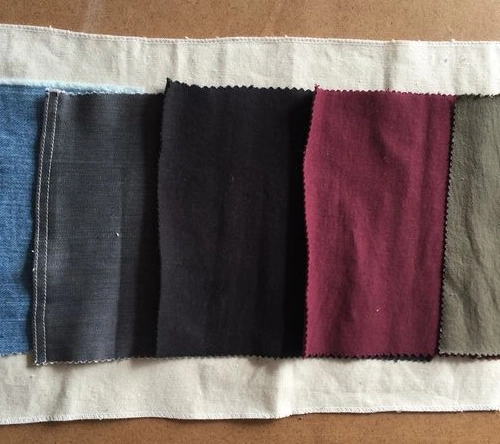
Photographs and swatch books flatten everything. Cloth needs to be handled — crushed in the hand to see how it recovers, draped over the arm to see how it falls, held to the light.
When you come in, we will put the shortlist in front of you and you will usually know within a minute. People are better at this than they expect. The eye and the hand tell you things that a specification sheet cannot.
We have been cutting suits in Brentwood since 1988, and we keep a wide range of cloth from established mills on hand. Come in, handle the options, and we will talk through what you actually need it for before anyone opens a swatch book.


